When AI Can Fake the Aesthetic, Authorship Becomes Everything
As the world turns its attention to football this summer, another story is unfolding beneath the jerseys themselves.
The Adidas x Someone Somewhere collaboration for the Mexico 2026 World Cup kit is getting attention for its craftsmanship. But the more interesting story is why it matters right now. What's interesting about campaigns like this is that they're arriving at a moment where culture itself is becoming easier to replicate than ever before. With AI, anyone can generate embroidery-inspired imagery in seconds. A huipil silhouette, Indigenous motifs, Caribbean color palettes — aesthetics that once carried geography, lineage, and memory can now be reproduced instantly and infinitely.
And because of that, brands are beginning to realize something important: The value may no longer live in the aesthetic alone — but in proof of origin.
That's what makes the collaboration between Adidas and Someone Somewhere feel bigger than just another culturally inspired campaign. Instead of simply borrowing the visual language of Mexican craftsmanship, the project structurally centered the very communities responsible for carrying those traditions forward. (SomeoneSomewhere)
WHAT ADIDAS AND SOMEONE SOMEWHERE UNDERSTOOD
More than 150 Indigenous women artisans from Puebla contributed to the collection, collectively investing over 165,000 hours of work into the jerseys. The collaboration itself took approximately 15 months from research to production. In an era increasingly optimized for speed, that timeline is part of the story. Rather than compressing culture into a campaign, Adidas invested in a process that couldn't be rushed. Each numbered jersey includes a QR code allowing consumers to learn more about the women and communities behind the craftsmanship. (Soccerbible.com) Two of the artisans — Petra and Cata — traveled to Germany to present the initial pieces to Adidas' historical archives. Their craft is now part of the brand's institutional history. Not credited from a distance. Present in the room.
Each numbered jersey arrives in a rectangular tin — the kind that lives in the back of every abuela's closet, repurposed from cookies into thread, buttons, and memory. That's not trend forecasting. That's cultural DNA. That distinction matters. There is a major difference between using culture as decoration and allowing culture to remain authored by the people who actually built it.
THE LABOR BECOMES THE LUXURY
That's part of why this collaboration stands out. The artisans are not invisible labor sitting behind a global campaign. Their work, names, communities, and time investment become part of the story itself.
The labor becomes the luxury.
And in an AI era, that matters more than ever. When aesthetics become infinitely reproducible, brands are beginning to understand that what people increasingly value is the human reality behind the work:
Real names. Real communities. Visible labor. Documented process. Cultural specificity. Proof that something came from actual people.
Not generated references to culture. Actual cultural authorship.
WHY THIS IS ALSO AN ETHICAL QUESTION
There's also an ethical dimension here that deserves to be acknowledged clearly. Unlike many campaigns that extract visual inspiration without redistributing visibility or economic participation, this project attempts to build infrastructure around authorship, attribution, and traceability.
That doesn't make it immune from critique. But what separates this collaboration from a gesture is Someone Somewhere's structure. The brand is a certified B Corp, founded in Mexico, with a mission centered on fair and consistent pay for artisan communities. The 165,000 hours weren't extracted — they were honored. Compensated in a way that reflects the true value of generational craft. That's the difference between a campaign and a commitment. One ends at the photo shoot. The other recognizes that what these women carry took lifetimes to build. (HouseofHeat)
It points toward a more responsible direction for how global brands can collaborate with Indigenous and Latino communities moving forward.
Because consumers are changing too. Latino consumers — one of the fastest growing and most culturally influential demographics — are increasingly spending intentionally with brands that feel genuinely connected to community rather than simply inspired by it.
Authenticity is no longer just a marketing tone. It's becoming part of brand trust itself.
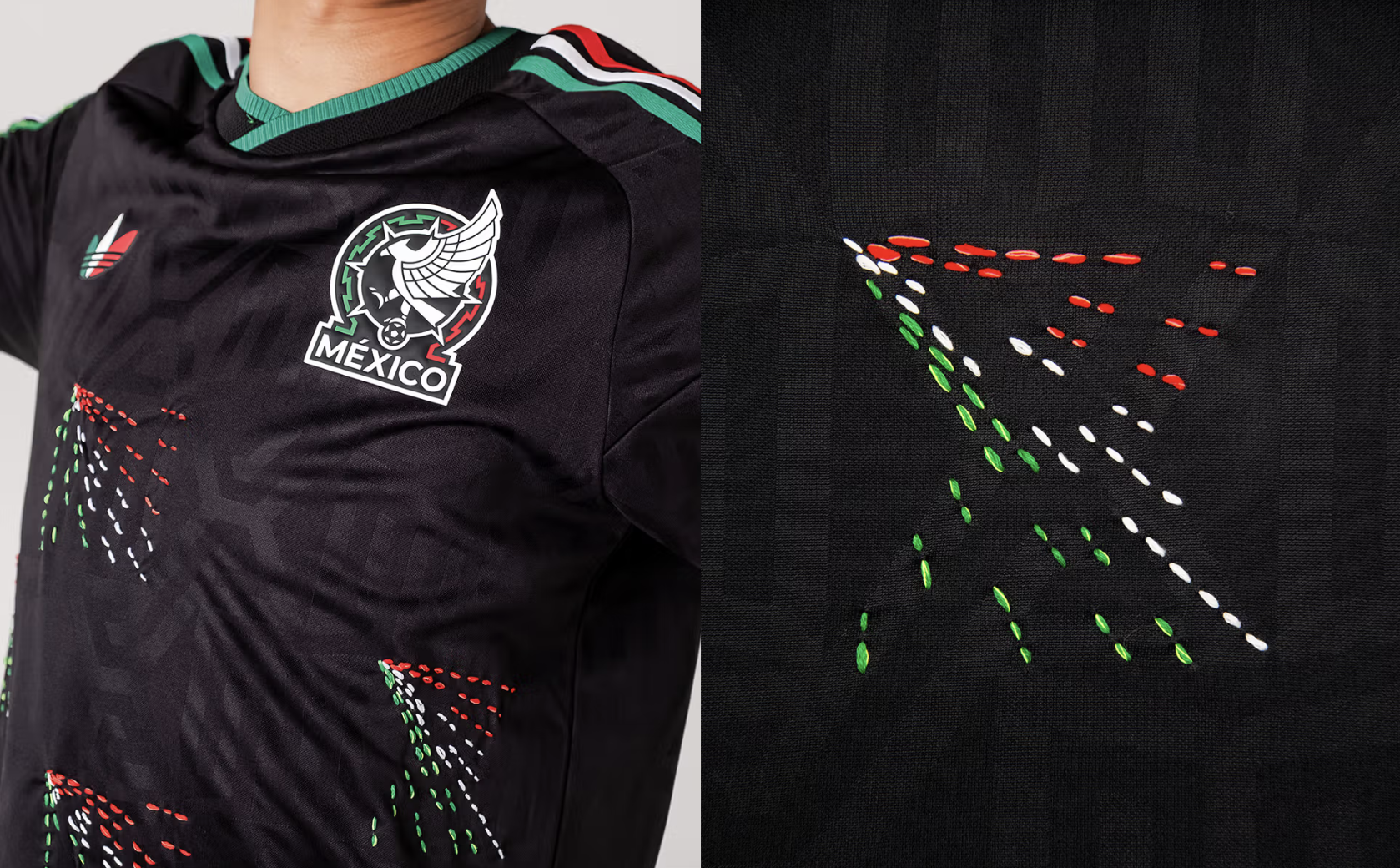
Credit: Adidas Someone Somewhere
THE BIGGER SHIFT HAPPENING
What makes this especially interesting is that it connects to a larger pattern already emerging across branding and creative strategy. Gap's recent campaign with Young Miko approached authenticity at the campaign level — allowing Young Miko's world, language, and identity to lead creatively. In a previous Papaya piece, Gap Got It Right — But Here's What Brands Usually Get Wrong, we wrote about how the campaign succeeded because culture wasn't treated as the product — it was treated as the context. Adidas and Someone Somewhere approach authenticity at the production level — embedding human authorship directly into the product itself. But what's also important to acknowledge is that many Latino and Indigenous-owned brands have already been building this way long before major global companies started framing authenticity as strategy. For many community-led brands, visibility of the maker, cultural authorship, inherited craft, and traceable production weren't marketing innovations — they were simply the natural result of building from within the culture itself. In many ways, larger brands are not inventing this framework. They're responding to standards Indigenous, Caribbean, and Latino communities have been practicing for generations: community attribution, visible craftsmanship, intergenerational storytelling, and cultural ownership that remains connected to the people who created it. That's the line worth watching. And in an AI era — when aesthetics are free but authorship is not — it may become one of the most important questions in branding altogether.
This is part of an ongoing Papaya series examining how Latino and Caribbean culture moves through brand, design, and creative strategy — who profits when it does, and how we can encourage our communities to step into these spaces owning and authoring their own heritage.